
About

Posts by :

Walker & Company and Cultural Design

Walker & Company and Cultural Design

Written by Philip L. McKenzie

Yesterday Walker & Company’s Bevel released their newest product the Bevel Trimmer. Bevel upped the ante in their goal to become the preeminent company creating beauty and health products for people of color. The Bevel Trimmer allows the company to enter a new market currently dominated by other players while staying true to their original goal. I was immediately impressed with the direction not strictly from a business product perspective but from a cultural one.

Tristan Walker, the founder of Walker & Company has long advocated for a more diverse perspective within the world of technology. That critique has often encompassed the importance of culture playing a role in finding new sources of talent and opportunity in a crowded market. In a Pando article Mr. Walker states

Most culture in this country is driven by Black culture, whether that’s food, music, dance, or anything else. And more recently Latino and Asian culture have driven global culture. Here I live in the most early adopting region in the world, and we know very little about the most early adopting culture. Therein lies the opportunity.”

This philosophy is what makes the Bevel Trimmer so interesting. Beyond the call to action in the urban grooming space the design, look, feel and marketing of the Bevel Trimmer is instantaneously culturally relevant. Queensbridge rapper, Nas, is an ambassador for the product and is featured in the new promotional video. Upon watching the video a few things leap out for those who know what to look for. The Bevel Trimmer mirrors the look and feel of an MC’s microphone. This is a homage to the power of the microphone as a tool to express one’s creativity. The barber’s trimmer holds the same power. Linking one of the greatest MCs to the neighborhood barber connects the power of skills, proficiency of your trade, high mastery and self expression all in one fell swoop. Nas is not just the usual celebrity endorsement. His involvement is more cultural currency as he instantly adds validity and ties the product together in authentic iconography. Hip-hop and barbershops go hand in hand. In the early days of hip hop aspiring rappers shared their mixtapes in barbershops to build an audience. The barbershop experience is communal one where the haircut is only part of the process. Sharing stories, jokes and arguing (usually about sports and hip hop) go hand in hand with a trip the barber. Jay-Z famously cites this in a line from Where I’m From “I’m from where n****s pull your car, and argue all day about who’s the best MC’s, Biggie, Jay-Z, and Nas”

Nas and Jay-Z continue to be at the center of these barbershop debates, a fact not lost on the Walker & Company team and in turn results in a seamless shout out to their audience.

To keep it simple, the Walker & Company team created a product, and a message that speaks in verbal and visual language of its target audience. By understanding the culture in which they move they were able to craft a message that permeates beyond product and speaks to their entire vision. Understanding culture at a deep level and how it plays in your messaging is mandatory when communicating with people who have more choices than ever. The bullshit meter is extremely high and those brands that think they can get over with communication that merely panders rather than empowers will face a steep uphill battle to win hearts, minds and wallets. Those same companies would be well served to take a lesson from the launch of the Bevel Trimmer and take necessary steps to understand culture and it’s relevance in brand position


Don’t Be PC & Don’t Be a Dick

Don’t Be PC & Don’t Be a Dick

By Michael Jamal Brooks & Philip L. Mckenzie

The war on language and PC culture has been waging across college campuses since the 80s and through the 90s. In the 21st century, the battlefield has shifted primarily online via social media and other online mediums. Both the political Left and Right find a leg to stand on in this ongoing debate. The Left focuses on an almost obsessive attention to the “right code” of speech; the Right in turn digs in its heels and resists any critique of the “good ol’ days”. Neither of these is particularly appealing. As a result, the internet is filled with spectacles such as #CancelColbert, the men’s rights movement, as well as finely worded but otherwise misplaced PC critique such as Jonathan Chait’s anti-political correctness essay. Battle lines are drawn and you engage at your own peril.

The almost always hilarious and almost always tasteless podcast “Race Wars” mocks the obsessive attention on speech and code words. Shock jock Anthony Cumia was rightfully taken to task for his openly racist diatribes but conversations he would have with late great comedian Patrice O’Neal were often cathartic, uncomfortable and sometimes enlightening. These conversations need a place to take place and take root in our collective consciousness.

As two dudes, who attempt (and sometimes succeed with mixed results) to treat people respectfully, act with empathy and consider power and privilege in society we have a simple rule: “Don’t be PC & Don’t Be A Dick”. In the tradition of Pope Francis we are invoking a new “golden rule” of the highest order.

Being PC & being a Dick are two shortcuts with a different nature but they are shortcuts just the same. Being PC stifles tension and debate. In short, we have to be more comfortable with being uncomfortable. Political correct tone is a short cut that leads away from discourse and the necessary complicated conversations that are needed to make genuine progress. Our complicated issues require rigor, not knee jerk reactions despite the fact that we live in a knee jerk world. It’s also not fun and turns to speech obsessive, emotionally hollow humorlessness really fast.

Being a Dick is the shortcut of wanting everything to remain the same simply because you are used to it. It is lazy and it is mean and has no place among thoughtful people who truly want to engage in serious issues. A Dick wallows in their own privilege rather than coming from a place of empathy and compassion. What is more galling is that Dicks often think they are being provocative or edgy when in actuality it is the exact opposite. There is nothing “edgy” about punching down and reinforcing racist, homophobic or misogynist views. Sadly that is as mainstream as it comes. Dicks need to grow up, reform their views and check their bullshit at the door. If Sarah Silverman can self reflect, anyone is capable of jumping off the “being a dick” shortcut.

We want a culture that is free, open, self critical, creative, empathetic uncomfortable and honest. We want comedy that is above all: funny! The two shortcuts of PC and Dick are narrowing the frames of our collective discussion and turning social media into yet another dull echo chamber focused on the petty and the small. If we want to cover everything from being entertaining to confronting massive levels of social injustice we need to be unafraid and transcend the dull shortcuts of “PC” and “Dick”.

Why We Get What We Deserve

Why We Get What We Deserve

Written by Philip L. McKenzie & Michael Brooks

Last week two stories dominated the business pages and spread through the social media bloodstream. First car manufacturing giant (and aggressively green branding) company, Volkswagen admitted to a global scheme to evade US clean air emissions standards on its diesel fleet. The ensuing fallout has already cost CEO Martin Winterkorn his job, the company has shed billions in market share as the stock price has plummeted and now faces an uncertain future.

And, of course there is Martin Shkreli, the CEO of Turing Pharmaceuticals who raised the price of their drug Daraprim more than 4000%. The outrage was instant, as he was attacked across social media with even Presidential hopeful Hillary Clinton weighing in. Shkreli seemed to revel in the role of the bad guy and having a smirky douche bag face certainly helped him fit the role.

Both stories speak to our deeper sense of “right” and “wrong” and offend our sensibilities. We don’t like cheating and greed and when it’s so naked and the costs so high-it piss us off. This is all good, but to what end? The bigger question is how long are we going to ignore the fact that our current economic and social system rewards and pushes for the very same behaviors we see in Volkswagen’s devious leadership and Martin Shrekli’s life threatening price gouging.

The reality is that as long as we value year over year growth, scale and the ensuing greed that it engenders we are asking for and getting the Volkswagens and Martin Shkreli’s we deserve.

To quote a line we love these outbreaks of greed and corruption “are a feature, not a bug” of the system. What that means is that we reward and implicitly endorse greed, corruption, inhumane ethics as a matter of course. This is simply what we do. Shkreli’s douchbaggery notwithstanding doesn’t make him any different that most of the pharma industry. As far as Volkswagen they are good company with an industry that has historical resisted technological progress and at other times criminally endangered the public

If we are outraged by behavior that does not serve our highest selves we must reward new behavior. We must reject short-term thinking, profit over people and negligence of our natural ecosystems. There are many steps we can take but these first three are critical toward creating a healthy and vibrant business environment.

  • Embracing “true” risk – Companies talk about taking risk but this is just lip service. The vast majority of companies are actually risk averse and play not to win but rather not to lose. True risk means having adult conversations with stakeholders and explaining what is reasonable to expect in terms of growth and market share. Instead in the Volkswagen case they took an unethical shortcut of lying and cheating to accomplish the goal of being the #1 car manufacturer in the world.
  • Commitment to a long-term strategy – Volkswagen and Shkreli both suffered from short term thinking even if in their minds the time horizons for their goals extended years in the future. Both of their reputations have taken massive hits that they might never recover from. Volkswagen’s ten-year plan based on lies and fraud has been a disaster on the level of the Exxon Veldez. A true commitment to a long-term strategy could have prevented their downfall. Instead of circumventing current emissions standards Volkswagen would have been better served questioning the long-term efficacy of their entire business model. Beyond diesel and cleaner fuel choices the big question is what does mobility itself look like in the next 15, 20, 50 years? That is the long term, big picture thinking necessary to keeping a company not just “innovative” but alive. Shkreli embraced the worst of the “quarter to quarter” mentality favored by Wall Street and decided he would rather gouge now and worry later.
  • Embrace a bigger set of values- Corporations use the language and branding cues to project the image of being good corporate citizens but seem to fail again and again when the stakes are high and the challenges are real. Its time to restructure corporate governance not just its branding to reflect the reality of their active role interfacing with every community and ecosystem on earth. You need to be citizens and start making your rhetoric a reality.
Return of the Boom Bap

Return of the Boom Bap

Written by Philip L. McKenzie & Michael Brooks

NY, NY – Designer headphones have had explosive growth over the past few years. Led by the ubiquitous Beats by Dre, residents of urban scapes have turned their travels into bass heavy personal concerts. Many people were more than willing to pay upwards of $300 for the latest headphones from Beats and other market players such as Sony, Sol, & Sennheiser.

Increasingly however the private and fashionable speaker experience has been replaced with the public experience of Bluetooth wireless speakers. Not since the days of my youth when “boom boxes” and “ ghetto blasters” dominated NYC streets have I heard so much music played in public spaces.

Music is no longer confining itself to headphones but instead is being blasted on subway cars and stations, while walking, in parks and everywhere in between. The speakers of choice are various types of the wireless models you can pretty much find anywhere. This does not come without it’s risk, but the trend line is up on Bluetooth wireless speakers. What has motivated this shift in consumer preference? Bluetooth speakers do provide a fairly high quality listening experience, given the size, but I can’t say they are that easy to carry when you’re truly mobile. There is also the issue of public courtesy as fellow subway travelers might not want to hear Fetty Wap at 800am while traveling to work. These impediments, both social and legal have not seemed to slow down their growth particularly in cosmopolitan spaces.

It will be interesting to see as the technology improves if Bluetooth wireless speakers will make a real dent in the headphone market. Is it possible that we can return to a normalized social interaction of one’s personal music choice becoming the soundtrack for your subway ride? Despite questions, it is clear that we are seeing a resurgence of the boom bap of the 70s/80s on our streets and on our subways.

What We Miss When We Talk About the Sharing Economy

What We Miss When We Talk About the Sharing Economy

Written by Philip L. McKenzie

Two year ago I published a white paper titled “Is Ownership Obsolete? When Sharing is Not Enough”. This paper used research, case studies and expert interviews to determine if the current nomenclature and branding around the so-called sharing economy was relevant. The reality is the fall out from the financial crisis so altered the social and political landscape that it was possible for economic alternatives to flourish. Many of the ideas to gain traction and flourish did so under the “shared economy” moniker. I determined that this language was useful to an extent but ultimately fell short of a radical reimagining of our economic destiny. The sharing economy does not allow for the sophistication necessary to critique the current hyper capitalist financial environment. Hence, two things are at work here. First, discussing the shared economy is a smoke screen, as I offered in the paper the issue is not sharing but rather ownership and our relationship to the subset of values around that concept. Second, sharing is not a viable alternative to ownership hence I introduced the concept of stewardship.

Stewardship is defined as, shared responsibility of a society to oversee, protect and pass on its critical resources over the course of generations. Stewardship and traditional Ownership have distinct value propositions that align themselves with particular outcomes. If we desire different outcomes from our structural systems we have to reward different behaviors. Much of the sharing economy does not accomplish this. There has been success in a limited sense but the adherence to the VC/PE culture of raising money (beholden to investors), desire and need to scale (exponential growth), and reliance on “freelance” economies makes them Ownership stories with sleight of hand branding. Nowhere is this more evident than with Uber, which is a darling of shared economy adherents. Uber meteoric rise has been celebrated even as it has had high profiles PR gaffes, and questionable employment practices. Outside of the “innovation” of finding easy rides and passing cost on to drivers it’s hard to see how in either spirit or operation Uber is changing the paradigm of traditional ownership business practices. Sharing is being used to put the proverbial lipstick on the pig. Uber, however is merely a useful example, this conversation is bigger than any particular company.

Traditional Ownership models, even those that have a component of so-called sharing economics still reward the same values: Control, vertical hierarchy, conformity, entitlement, zero-sum gaming and skepticism. Stewardship in contrast relies on: a “Matrixed” network, collaborative environment, non-zero sum gaming, trust and transparency. Most notably the multi-billion dollar Spanish Co-operative Mondragon is an example of a company surviving and thriving despite economic turmoil due to its adherence to principles of stewardship. US based Patagonia is another, as their commitment to stewarding the world’s environmental resources impacts how they do business and position themselves as a brand. We have an amazing opportunity to recalibrate the conversation away from so-called sharing economics and toward a more fruitful embrace of the values of stewardship.


Why Brands Need A Cultural Prime Directive

Why Brands Need A Cultural Prime Directive

Written by Philip L. McKenzie & Michael Brooks

Two cinematic experiences, one just released in theaters the other celebrating its 25th anniversary, have injected tremendous cultural insight and energy into the public conversation.

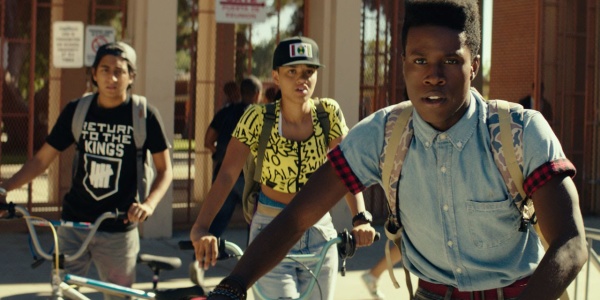
Sundance indie favorite, Dope, directed by Rick Famuyiwa made its theatrical debut a couple of weeks ago. The critically lauded film takes us into the lives of three California teens. These likable, self described nerds, geek out on 90s hip hop (the star Shameik Moore rocks a High Top), play music, deal with teen sexual frustration and navigate the dangers and excitements of their Englewood neighborhood.

The film is a smart look at both the teenage coming of age story and urban lifestyles. It is told through a unique culture lens that requires you literally have to be “dope” to get Dope. It drops you into a particular cultural context and dares you to keep up. It is clearly created by and for those who will understand its cultural intricacies but is inviting enough that any engaged and empathetic audience can join the adventure. Dope, gives a beautiful formula for the relationship between local, specific expression and larger cultural communication. It takes a lot of patience and genuine engagement to get this path right and Dope gives great insight into how to do it.

Paris is Burning, created by filmmaker Jennie Livingston, chronicles the life and times of NYC’s African American and Latino gay and transgender community and their identification with ball culture. This film is an in depth look at a world that was so far outside of the mainstream, and was driven solely by its participants desire to create world for themselves. It is a spectacle in the finest form of creativity, passion and desire to be oneself but countered with an equal desire to be seen and heard.

Watching this movie, you are forced to ask yourself, could something this distinct and commercially unbound manifest itself in today’s market saturated culture? Could the search for more lucrative brand opportunities kill any cultural expression before it even gets a chance to find its own legs? These questions lead us to believe that we need a new set of rules when we think about brand engagement in cultural spaces.

Culture by its nature is difficult to define though it is almost universally accepted as an important part of our social and corporate lives. We often discuss culture and its relationship with brands and their desire to connect with audiences. Most recently here and here. Noted author and anthropologist, Grant McCracken does a great job of parsing the challenges of identifying culture and its importance in a blog post earlier this year. These lines immediately leapt out:

Normally, culture supplies the meanings and rules with which we understand and navigate the world. And normally, it does this invisibly, effortlessly, in real time. We don’t sense culture operating in us. It just does. It’s like language; it’s just there.

But sometimes culture is a little shaky. It has found a world it can’t quite render or organize. And when that happens, wonderful things happen. We understand that we are no longer under “strict instructions.” We are no longer the captive of meanings made. We are now living in a world where meaning and rules are up for grabs.”

McCracken is correct. We like to say change is created on the margins. This is essentially ideologically similar to the idea of no longer having strict instructions. This is the essence of creating something new, having a world that is unclear made clear by new cultural norms. Creative’s, miscreants and other people of that sort are very good at this because they often need this skill to survive. Or at the very least this skill allows them to make sense of the world around them. Brands however, are less good at this because they are by definition organizations of hierarchy and structure. They can however be cultural allies, and that is where the Cultural Prime Directive comes into play.

The Prime Directive is a reference from the Star Trek Universe. It is general order #1 for Starfleet and is considered one of the guiding principles of the United Federation of Planets. Simply put, the Prime Directive prohibits the Federation from interfering with new cultures or playing an active role in their development. The purpose is to allow societies to develop at their own pace without interference by those who have (usually technological) advantages. Now this does not mean that culture creators are disadvantaged players but relative to corporate players their intent can be outmuscled and gentrified. A Brand Prime Directive will set the stage for brands to be cultural allies without being cultural gentrifiers. We will outline principles and corresponding rationale that can serve as a blueprint for both strategic and behavioral shifts.

Do No Harm – This is where it begins. Brands must become allies of cultural movements. They can’t control them or co-opt them. They must resist the industrial age notion of ownership and instead embrace a stewardship role ensuring that these movements can benefit from patronage.

Reevaluate Your Time Horizon – The old adage says, anything worth doing is worth doing well. Which also means it should be done with care. Care means time. In our current quarter-by-quarter “Wall Street-ification” corporate viewpoint time is seen as the enemy. Every program, every initiative must work immediately or it is scrapped and replaced with something newer, something shinier. Often with the same mixed results. Brands must engage with a time horizon that encourages true organic cultivation of culture.

Be Brave -Long term thinking and cultural insight require courage. Not everything can be wrapped in a bow of analytics and “cool hunting”. Brands must be okay with allowing cultural movements to “simmer”. Only then can they establish the right relationships at the right time. In short this requires taking deep breaths and being bold.

Love Centered Revolution“At the risk of seeming ridiculous, let me say that the true revolutionary is guided by a great feeling of love. It is impossible to think of a genuine revolutionary lacking this quality.” Che Guevara

Revolutionary Che Guevara can be considered our first Chief Cultural Officer. Centering a revolution on the concept of love is well…revolutionary. Love as the predominant decision making tool rather than fear will allow brands to exercise a new found freedom to engage with culture.

With this skill set, and attitudes for approaching culture, brands can align, learn from and facilitate, instead of distort, rush and homogenize. Brands are the Medici’s of today’s world and they need the wisdom of the Cultural Prime Directive to guide their actions and frames. With this approach culture can reemerge and brands can be in target. Or put in a “dope” way: “play your position”.


I Am Not a Business, Man!

I Am Not a Business, Man!

Written by Philip McKenzie and Michael Brooks

“This ain’t no tall order, this is nothin to me
Difficult takes a day, impossible takes a week
I do this in my sleep,
I sold Kilos of coke, (so?) I’m guessin’ I can sell CD’s
I’m not a businessman; I’m a business, man
Let me handle my business, damn!” – Jay-Z, Diamonds from Sierra Leone (remix)

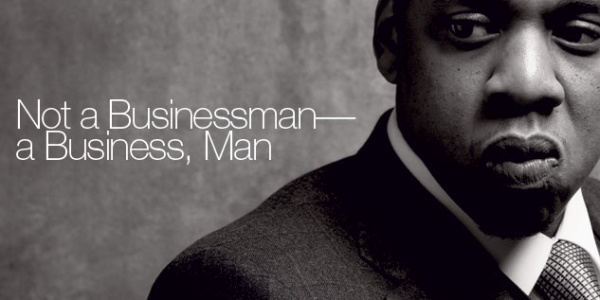
The above quote from Jay-Z is not only a great example of the type of clever wordplay the rapper is known for; it also explains the guiding idea of our times. Jay-Z, isn’t simply a successful musician or even entrepreneur, instead he is an embodiment of business itself. This is no simply braggadocio, Jay-Z in that one line has reversed engineered what corporations have long sought to do which is have themselves classified as people. Jay-Z is a person heralding himself as a corporation. In today’s economy it isn’t just Jay-Z who is a “business, man” you are too, and with respect to Jay’s lyrically capacity this is bad news for our economy, social and ecological lives. But, first back to Jay.

Given his rags to riches story, and his extreme financial success this boast is one of pride. He has beaten the odds and achieved what few ever could. This is a very traditional American narrative wrapped in Jay-Z’s own particular charisma. But, the line goes deeper than rags to riches and points to a market philosophy that has created mass insecurity, skyrocketing inequality and forced each of us to define personal brands and identities in a competitive and complex marketplace. This philosophy and decades of Neo-liberal policy has made our existence as mini-businesses rather than human beings more and more a reality.

Corporations loom larger than ever in our national discourse. Huge multinationals dominate not only our economic reality but our social reality as well. In the past, a corporate job came with stability and benefits (healthcare, pensions). In an economy still dealing with a new corporate reality post-2008 meltdown, that stability is a thing of the past. Not only did the crisis not reign a runaway corporate sector it broadly reinforced its power.

Corporations in their current incarnation leave more and more of their workforce unprotected with no sign of that trend reversing. Our public policy discourse advocates continued dismantling of the social welfare state leaving citizens with fewer options. Even those businesses that proclaim to “disrupt” the old way of doing things are more of the same. The so-called “Sharing Economy” populated by companies such as Uber, Lyft, AirBnB and others often find themselves aligned with those whose rallying cry is de-regulation at all cost. As the marginal cost of production nears zero are these companies best equipped to provide long term viable work. And how are we defining viable? Is it merely an economic measurement i.e. minimum wage/salary or does it address the quality of our work. Are we doing work that is meaningful not only to ourselves but to the world that we live in.

Where does that leave us? How does one compete in an environment when we are all charged with becoming a business? The implication of this on our psychological, physical and financial well-being is precarious at best.

If we are to assume we are businesses, then we are in a constant state of branding and product launch. Even if that product is us. In a zero-sum capitalist model how do we collaborate if each of us is running their own going concern? The popular edict that triumphs business success over all else is problematic when applied to human beings. The same rules don’t apply, nor should they.

We should not be driven by the whims of a marketplace that favors the monied, the privileged and the powerful. After all, if a business fails we are taught a better business will take its place. But what about those of us in our society who are “failing”? Absent employment options, social services, educational opportunities we cannot merely write them off as poor corporate citizens. In order to confront increasingly daunting social realities we must not reject our humanity instead we should unapologetically embrace it. Technocrats want to reduce us to streams of data removing us from our flesh and blood selves. This too must be rejected. Adopting the language of the powerful is not by default an empowering act. We are in the midst of writing an incredible new story capturing how we see ourselves and the world around us. One of the first chapters must be to reject the notion that we, as a common humanity, are a business, man!

Why Mindfulness

Why Mindfulness

Over the years of producing Influencer Conference we have settled on a core group of values that inspire and guide us as a company. Our premise is simple. We believe that values, the things we care about and drive our passions are more important that our vocation, the things we do. These values shape the agenda, speakers and audience of each conference.

Explaining mindfulness and why we include it among our core values is pretty easy. During 2012’s conference I remember looking out at the crowd and seeing a sea of blue glowing screens. Laptops, tablets, smartphones all lit up signifying people were firmly plugged in, communicating with someone or something but not actually “in the room”. I was struck by this, because we take great pains to curate an event that would be interesting, thought provoking and beneficial. The audience confirmed their interest by purchasing a ticket, so clearly they agreed. Yet, here we were in a room together and apart. I thought to myself, are people paying attention? Are they listening to the discussion or merely waiting for the next soundbyte to be shared via social media? These questions remained with me post conference and it was shortly thereafter I made a decision to encourage our platform to move to one that emphasized mindfulness. I have practiced yoga and Vedic meditation for a few years and both practices have become increasingly important in how I harness my creative energy and manage stress. Now, that doesn’t mean in order to be mindful everyone has to do either of those two things (though we encourage it!). What we mean by mindfulness, is removing distractions in order to be fully engaged in the present circumstance. As a result, we are now asking that guests refrain from plugging in while talks are in sessions.  The value lies within the room, being present, not outside in the technosphere.

The commitment to mindfulness is a challenge as sponsors and partners partially determine the value of their participation by social media metrics. We respect that. We just don’t agree it is the standard by which we should measure the success of our event. We’ll continue to ask that our guests pour their attention, creativity and uniqueness into the room rather than outside of it.

This year we tackle this topic more in depth with the panel discussion: Present Tense: How Being Mindful Drives Creativity.

You can register here for that talk or any of our other panels via our website here.

And if you want to check out a cool introduction video to Vedic Meditation and it’s benefits take a look at this clip shot by Vedic & Yoga Instructor Light: 

The Manifesto of a Silo Smasher

The Manifesto of a Silo Smasher

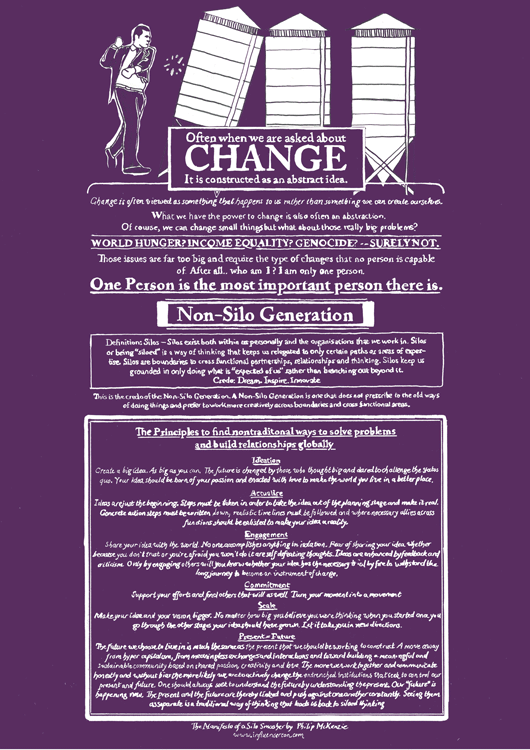
I was asked to write this in 2011 by friend and author Kyra Maya Phillips. It was part of a project to inaugurate the opening of Hub Westminster in London. I was excited to share my ideas on designing a present and future that we can be proud of. The fruit of that labor is below and it’s the first time it’s been published outside of the Hub. Hopefully there will be nuggets that can help shape and sharpen your passion. Enjoy and build.

The Manifesto of a Silo Smasher

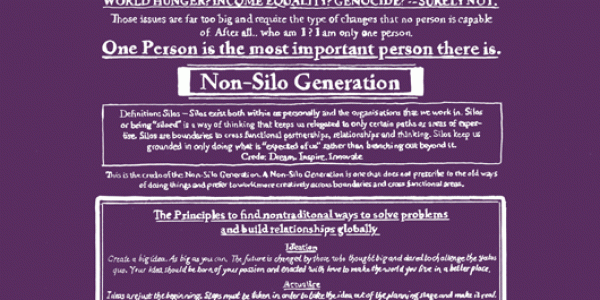
Often when we are asked about “change” it is constructed as an abstract idea. Change is often viewed as something that happens to us rather than something we can create ourselves. What we have the power to change is also often an abstraction. Of course, we can change small things but what about the really big problems? World hunger? Income inequality? Genocide? Surely not. Those issues are too big and require the type of changes that no one person is capable of. If they are attempted better to be attempted by someone other than myself. Because, after all..who am I? I am only one person. But with a new manifesto with a new way of looking at the world you can realize that “one person” is the most important person there is.

My Manifesto is that of creating a new way of thinking personally and organizationally and it is designed for the “Non-Silo Generation”.

Definition: Silos – Silos exist both within us personally and the organizations that we work in. Silos or being “siloed” is a way of thinking that keeps us relegated to only certain paths or areas of expertise. Silos are boundaries to cross functional partnerships, relationships and thinking. Silos keep us grounded in only doing what is “expected of us” rather than branching out beyond it.

Credo: Dream. Inspire. Innovate

This is the credo of the Non-Silo Generation. A Non-Silo Generation is one that does not prescribe to the old ways of doing things and prefer to work more creatively across boundaries and cross functional areas. The Non-Silo Generation seeks to find nontraditional ways to solve problems and build relationships globally.

The principles of the Non-Silo Generation

  • Ideation – Create a big idea. As big as you can. The future is changed by those who thought big and dared to challenge the status quo. Your idea should be born of your passion and enacted with love to make the world you live in a better place.
  • Actualize – Ideas are just the beginning. Steps must be taken in order to take the idea out of the planning stage and make it real. Concrete action steps must be written down, realistic timelines must be followed and where necessary allies across functions should be enlisted to make your idea a reality.
  • Engagement – Share your idea with the world. No one accomplishes anything in isolation. Fear of sharing your idea whether because you don’t trust or you’re afraid you won’t do it are self defeating thoughts. Ideas are enhanced by feedback and criticism. Only by engaging others will you know whether your idea has the necessary trial by fire to withstand the long journey to become an instrument of change.
  • Commitment – Support your efforts and find others that will as well. Turn your moment into a movement.
  • Scale – Make your idea and your vision bigger. No matter how big you believe you were thinking when you started once you go through the other stages your idea should have grown. Let it take you in new directions.
  • De-mystify the process – anything can be learned and expertise in a particular discipline can always be acquired or borrowed. You do not have to know how to do everything especially when you can work with and engage others to fill those gaps. No process is too complicated to master if one merely takes the time and has the necessary focus. Processes are often made to be seemingly difficult because it keeps traditional organizations and gate keepers in power. Refuse to be mystified by their process. Instead either learn your way through it or create your own more efficient way to do the same thing. Circumvent the noise of the traditional.
  • Present = Future – The future we choose to live in is much the same as the present that we should be working to construct. A move away from hyper capitalism, from meaningless exchanges and interactions and toward building a meaningful and sustainable community based on shared passion, creativity and love. The more we work together and communicate honestly and without bias the more likely we are to actively change the entrenched institutions that seek to control our present and future. One should always seek to understand the future by understanding the present. Our “future” is happening now. The present and the future are thereby linked and push against one another constantly. Seeing them as separate is a traditional way of thinking that leads us back to siloed thinking.

nonsilo-1

Illustration by  Robert Reed

Nothing Like the Present

New York, NY – I hear a lot of talk about the future. I can scarcely check my Facebook or Twitter feeds without reading a bold prediction about our collective future. I have no shortage’s of sources that are willing to tell me what service, what application, what trend, what movement is going to change everything and finally make life worth living. I am so enthralled about this not so distant utopian future I almost forgot about my nagging present. Yes, that’s right the present. Remember that thing that is happening right now, even as you read this, yes that is the present. The present doesn’t quite get the attention that the future does and when you think about it that might be where we are falling short. I am making a concerted effort to dedicate myself to the present and here are a couple of reasons.

We suck at predicting the future

There has been an explosion of so-called Futurist, who define themselves as having the ability to identify trends and use that to extrapolate information on the future. These observations or predictions are then sold to brands, marketers, agencies that are all seeking answers to better package and sell us stuff. Unfortunately, we suffer from several biases that make future prediction almost impossible. We usually do not process the correct variables in order to draw reasonable assumptions on the future. This happens all the time in predictive models i.e. we get the wrong output (the future) because we use the wrong input (perceived present). This can be disastrous, as proven by recent news highlighting flaws in the economic model that had been used to justify incredibly wrong-headed austerity policies throughout Europe. Incorrect inputs resulted in broken economic models and subsequently broken economic policy. The results of which are still being felt throughout the world.

As much as we are future focused we routinely wrongly base predictions based on the belief that our present reality will remain static. This means that the way things are is the way they shall remain so we can make predictions based on that “sameness”. By assuming our present behavior will dominate in an uncertain future landscape is a sure fire way to miss the boat.

Finally, the future is not dictated, but rather it’s a metamorphosis of multiple variables. Very rarely is there a guru, top-down predictive nature to the future rather it bubbles up from the bottom. How many music sites and blogs were predicting the rise of Americana influenced folk rock bands like Mumford & Sons, The Lone Bellow and the Lumineers before it exploded commercially? It seems obvious now because of their ubiquitous success but in reality that was built in small venues, fan by fan before anyone mainstream even thought about it. What seems like an obvious shift toward “authentic musicianship” was really a movement from communities of fans who simply loved the music.

Being present is living

“It’s being here now that’s important. There’s no past and there’s no future. Time is a very misleading thing. All there is ever, is the now. We can gain experience from the past, but we can’t relive it; and we can hope for the future, but we don’t know if there is one.”  George Harrison

This quote says it all. Our future obsession robs us of the mindshare it takes to appreciate, focus on and exploit our present. The present is where our relationships live. The present is where our passions are. The present is where our knowledge is built. We create a healthy and vibrant present by paying attention to these things instead of projecting them into an unknowable future. When we embrace our present we are truly living because we are getting the most from where we are at the moment. This is not to imply that the future is not important. The future is vitally important not only for us but for ensuring a healthy natural and psychological ecosystem for next generations. By self-actualizing our present we begin to take a responsible and empathetic worldview.  Each act in our present shapes the future we wish to see. Increasing our focus on the present ensures a more predictive future.

“For eight hundred years have I trained Jedi. My own counsel will I keep on who is to be trained. A Jedi must have the deepest commitment, the most serious mind. This one a long time have I watched. All his life has he looked away… to the future, to the horizon. Never his mind on where he was. Hmm? What he was doing. ” – Yoda

The present requires a mindfulness that can’t be achieved if one is perpetually looking forward. In fact, mindfulness and the present are linked together. Attention to detail, focus on becoming proficient at a skill or craft are all dependent on mindfulness. This is more of a challenge now than ever. We are one click away from constant distraction. We are often engaged in one way conversations describing what the future will look like and guaranteeing success if we merely listen to X, Y or Z. The reality is more complex and hence it requires our absolute attention and focus. If we care as deeply about our future as we claim then we need to do the heavy lifting with our mindfulness. It’s not as sexy to talk about the present but it’s a hell of a lot more necessary than the future.

Load More