


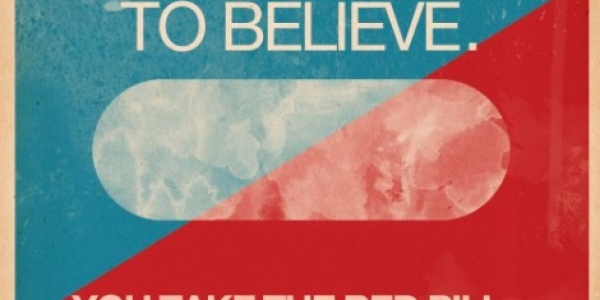
Red Pills Unite! Good Riddance Jedi
“Try not. Do or do not. There is no try” – Yoda
“You take the blue pill, the story ends, you wake up in your bed and believe whatever you want to believe. You take the red pill, you stay in wonderland, and I show you how deep the rabbit hole goes.” – Morpheus
The Star Wars series and its accompanying mythos has become one of the most popular and referenced stories in the world. There is scarcely a place where people are not familiar with at least the basics of this world. It is the classic good versus evil story. The upstart, scrappy Jedi warriors are the defenders of all that is good, with high-minded ideals and powers that allow them to use the mystical energy of the Force. The evil, as personified by villain (and then redemptive hero) Darth Vader, use the Force as well but theirs is a twisted art popularly known as the “dark side of the Force”. Since Star Wars ascension into pop culture this language has become the metaphor of choice in describing business culture. Startup culture in particular is attracted by the rebellious, against all odds coda of the Jedi. The “new agey” nature of the Force appeals to those gurus and mystics who are seek answers in the onscreen lessons of Jedi Masters like Yoda and Obi-Wan Kenobi. On the surface, all of this seems harmless. What does it matter if some random entrepreneur describes himself as a Jedi, using his hard won mastery of the Force to create the next dating app? How many people have referenced the above quote by Jedi Master Yoda to focus their energies and push through boundaries? As a self-described nerd and fan of all things Star Wars, I too have been inspired by this fantastic world. I believed being a Jedi would be one of the most amazing things ever. It’s only more recently that I have come to realize I don’t want to be a Jedi. Though portrayed as the heroes in the films, the Jedi actually suffer from deep flaws that contributed to their demise and the downfall of the Republic they were sworn to protect. The Jedi were so assured of the correctness of their position they failed to realize they personified many of the problems they wished to solve. I have now come to realize that the Matrix is a better metaphor for a culture of change that is essential to solve daunting societal issues. The blue pill/red pill dynamic of the Matrix is far more relevant to those who are on the front lines advocating for change and reform in our current structure. In the Matrix, the hero Neo realizes that the entire world he has known is actually a construct of machines. The real world is long dead, the machines have taken over and keep humans in a dream like state where they live lives they believe are real. They do this in order to serve as living batteries plugged into the Matrix providing the machines with power. Very few in the Matrix sense that something is off, fewer still are identified and given the choice that Morpheus gives Neo. Take the blue pill, and remain asleep or take the red pill and enter the “real world”. Taking the red pill and unplugging from the Matrix immediately drops you into a harsh, unforgiving reality where you represent a threat to the very existence of the Matrix.
The Jedi mythology is easy, heroic and by extension seductive. Who wouldn’t want to cast themselves as enlightened monk-like warriors? But with a closer look, those before mentioned flaws are more nagging. The Jedi are the sworn protectors of the Republic. The Republic they are tasked to protect however is crumbing and corrupt. The Jedi spend little time, debating on whether the system they are fighting to protect is worth the effort or whether their considerable talent and skills should be used to build something new. Though they mean well they prop up the existing system and benefit from the status quo. Jedi are dogmatist; their belief system trumps anything else…unless of course it conflicts with their allegiance to the existing power structure. In that case, their belief system is second; maintaining the status quo always comes first.
Contrast the Jedi mythos with the liberated humans in the Matrix. The world of the Matrix is a more realistic portrayal of what life is like for those who are breaking the rules. The rules of the Matrix (the program) run on a set of presets that are meant to do one thing, control the population. Freeing yourself from the Matrix requires 1. Recognition of the existence of the Matrix (even in the abstract) 2. Commit yourself to becoming free from the Matrix (a one way decision) and 3. Commit yourself to building a new system that is wholly incompatible with the existing system. These options are not easy, nor are they glamorous. In fact, they are fraught with danger. The real world is not sexy. It’s dirty, the food is disgusting and your life is under constant threat by those who have a vested interest in keeping the Matrix intact. Sound familiar? Every great idea, every leap forward is a result of either perceiving the world in a different way or being in opposition to the status quo. It is not enough to ask questions, but one must ask the right questions in order to solve serious problems. We need more “red pills” that are committed to examining the very real structural issues of privilege, wealth inequality, gender bias and faux diversity that hold back true innovative progress that benefit all of us. So my choice is to turn away from the Temple, toss away the light saber and grab the red pill. The real world is waiting….