

Society

What We Miss When We Talk About the Sharing Economy

What We Miss When We Talk About the Sharing Economy

Written by Philip L. McKenzie

Two year ago I published a white paper titled “Is Ownership Obsolete? When Sharing is Not Enough”. This paper used research, case studies and expert interviews to determine if the current nomenclature and branding around the so-called sharing economy was relevant. The reality is the fall out from the financial crisis so altered the social and political landscape that it was possible for economic alternatives to flourish. Many of the ideas to gain traction and flourish did so under the “shared economy” moniker. I determined that this language was useful to an extent but ultimately fell short of a radical reimagining of our economic destiny. The sharing economy does not allow for the sophistication necessary to critique the current hyper capitalist financial environment. Hence, two things are at work here. First, discussing the shared economy is a smoke screen, as I offered in the paper the issue is not sharing but rather ownership and our relationship to the subset of values around that concept. Second, sharing is not a viable alternative to ownership hence I introduced the concept of stewardship.

Stewardship is defined as, shared responsibility of a society to oversee, protect and pass on its critical resources over the course of generations. Stewardship and traditional Ownership have distinct value propositions that align themselves with particular outcomes. If we desire different outcomes from our structural systems we have to reward different behaviors. Much of the sharing economy does not accomplish this. There has been success in a limited sense but the adherence to the VC/PE culture of raising money (beholden to investors), desire and need to scale (exponential growth), and reliance on “freelance” economies makes them Ownership stories with sleight of hand branding. Nowhere is this more evident than with Uber, which is a darling of shared economy adherents. Uber meteoric rise has been celebrated even as it has had high profiles PR gaffes, and questionable employment practices. Outside of the “innovation” of finding easy rides and passing cost on to drivers it’s hard to see how in either spirit or operation Uber is changing the paradigm of traditional ownership business practices. Sharing is being used to put the proverbial lipstick on the pig. Uber, however is merely a useful example, this conversation is bigger than any particular company.

Traditional Ownership models, even those that have a component of so-called sharing economics still reward the same values: Control, vertical hierarchy, conformity, entitlement, zero-sum gaming and skepticism. Stewardship in contrast relies on: a “Matrixed” network, collaborative environment, non-zero sum gaming, trust and transparency. Most notably the multi-billion dollar Spanish Co-operative Mondragon is an example of a company surviving and thriving despite economic turmoil due to its adherence to principles of stewardship. US based Patagonia is another, as their commitment to stewarding the world’s environmental resources impacts how they do business and position themselves as a brand. We have an amazing opportunity to recalibrate the conversation away from so-called sharing economics and toward a more fruitful embrace of the values of stewardship.

 

Why Brands Need A Cultural Prime Directive

Why Brands Need A Cultural Prime Directive

Written by Philip L. McKenzie & Michael Brooks

Two cinematic experiences, one just released in theaters the other celebrating its 25th anniversary, have injected tremendous cultural insight and energy into the public conversation.

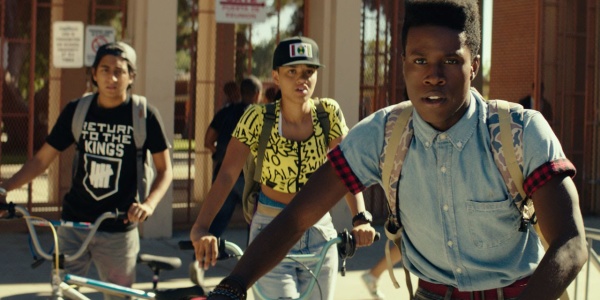
Sundance indie favorite, Dope, directed by Rick Famuyiwa made its theatrical debut a couple of weeks ago. The critically lauded film takes us into the lives of three California teens. These likable, self described nerds, geek out on 90s hip hop (the star Shameik Moore rocks a High Top), play music, deal with teen sexual frustration and navigate the dangers and excitements of their Englewood neighborhood.

The film is a smart look at both the teenage coming of age story and urban lifestyles. It is told through a unique culture lens that requires you literally have to be “dope” to get Dope. It drops you into a particular cultural context and dares you to keep up. It is clearly created by and for those who will understand its cultural intricacies but is inviting enough that any engaged and empathetic audience can join the adventure. Dope, gives a beautiful formula for the relationship between local, specific expression and larger cultural communication. It takes a lot of patience and genuine engagement to get this path right and Dope gives great insight into how to do it.

Paris is Burning, created by filmmaker Jennie Livingston, chronicles the life and times of NYC’s African American and Latino gay and transgender community and their identification with ball culture. This film is an in depth look at a world that was so far outside of the mainstream, and was driven solely by its participants desire to create world for themselves. It is a spectacle in the finest form of creativity, passion and desire to be oneself but countered with an equal desire to be seen and heard.

Watching this movie, you are forced to ask yourself, could something this distinct and commercially unbound manifest itself in today’s market saturated culture? Could the search for more lucrative brand opportunities kill any cultural expression before it even gets a chance to find its own legs? These questions lead us to believe that we need a new set of rules when we think about brand engagement in cultural spaces.

Culture by its nature is difficult to define though it is almost universally accepted as an important part of our social and corporate lives. We often discuss culture and its relationship with brands and their desire to connect with audiences. Most recently here and here. Noted author and anthropologist, Grant McCracken does a great job of parsing the challenges of identifying culture and its importance in a blog post earlier this year. These lines immediately leapt out:

Normally, culture supplies the meanings and rules with which we understand and navigate the world. And normally, it does this invisibly, effortlessly, in real time. We don’t sense culture operating in us. It just does. It’s like language; it’s just there.

But sometimes culture is a little shaky. It has found a world it can’t quite render or organize. And when that happens, wonderful things happen. We understand that we are no longer under “strict instructions.” We are no longer the captive of meanings made. We are now living in a world where meaning and rules are up for grabs.”

McCracken is correct. We like to say change is created on the margins. This is essentially ideologically similar to the idea of no longer having strict instructions. This is the essence of creating something new, having a world that is unclear made clear by new cultural norms. Creative’s, miscreants and other people of that sort are very good at this because they often need this skill to survive. Or at the very least this skill allows them to make sense of the world around them. Brands however, are less good at this because they are by definition organizations of hierarchy and structure. They can however be cultural allies, and that is where the Cultural Prime Directive comes into play.

The Prime Directive is a reference from the Star Trek Universe. It is general order #1 for Starfleet and is considered one of the guiding principles of the United Federation of Planets. Simply put, the Prime Directive prohibits the Federation from interfering with new cultures or playing an active role in their development. The purpose is to allow societies to develop at their own pace without interference by those who have (usually technological) advantages. Now this does not mean that culture creators are disadvantaged players but relative to corporate players their intent can be outmuscled and gentrified. A Brand Prime Directive will set the stage for brands to be cultural allies without being cultural gentrifiers. We will outline principles and corresponding rationale that can serve as a blueprint for both strategic and behavioral shifts.

Do No Harm – This is where it begins. Brands must become allies of cultural movements. They can’t control them or co-opt them. They must resist the industrial age notion of ownership and instead embrace a stewardship role ensuring that these movements can benefit from patronage.

Reevaluate Your Time Horizon – The old adage says, anything worth doing is worth doing well. Which also means it should be done with care. Care means time. In our current quarter-by-quarter “Wall Street-ification” corporate viewpoint time is seen as the enemy. Every program, every initiative must work immediately or it is scrapped and replaced with something newer, something shinier. Often with the same mixed results. Brands must engage with a time horizon that encourages true organic cultivation of culture.

Be Brave -Long term thinking and cultural insight require courage. Not everything can be wrapped in a bow of analytics and “cool hunting”. Brands must be okay with allowing cultural movements to “simmer”. Only then can they establish the right relationships at the right time. In short this requires taking deep breaths and being bold.

Love Centered Revolution“At the risk of seeming ridiculous, let me say that the true revolutionary is guided by a great feeling of love. It is impossible to think of a genuine revolutionary lacking this quality.” Che Guevara

Revolutionary Che Guevara can be considered our first Chief Cultural Officer. Centering a revolution on the concept of love is well…revolutionary. Love as the predominant decision making tool rather than fear will allow brands to exercise a new found freedom to engage with culture.

With this skill set, and attitudes for approaching culture, brands can align, learn from and facilitate, instead of distort, rush and homogenize. Brands are the Medici’s of today’s world and they need the wisdom of the Cultural Prime Directive to guide their actions and frames. With this approach culture can reemerge and brands can be in target. Or put in a “dope” way: “play your position”.


Feminine Values & Gender

Feminine Values & Gender

Each day I feel there are new conversations and opinion pieces that tackle the idea of feminism and what it means to have an inclusive society. I have good friends that do great work in this arena advocating for the inclusion of women and their perspectives in a myriad of fields that currently do not include much diversity. I applaud and support those efforts but I do believe we need to shift the conversation in a different direction. Instead of seeking out representation based on gender we need to focus on representation based on values. The idea of promoting feminine values, among them empathy, collaboration, and sharing, in order to create better institutions is critical to move the world forward to a more inclusive and just future.

When I was a kid my mother had an old saying “Your color isn’t always your kind”. What this simply means is that just because someone looks like you doesn’t mean they are like you. These flimsy shells of different colored skin and boy or girl parts that we obsess about only tell part of the story. They are easy identifiers that we all use to assign group identify and superficial behavioral traits. We must go deeper and establish a link to our values. The beliefs that we hold dear and align ourselves with carry more weight than almost anything else we encounter. It is increasingly important to find, connect and share with those who embody the same values. In the case of feminine values, the challenge is if we triumph only gender we assume that biological similarity will equate to shared perspective. This is not always the case.

The recent work by author/consultant John Gerzema “The Athena Doctrine” researches these values from a global perspective. He interviews men and women who subscribe to feminine values to build coalition and drive change. The work of Leonard Schlain examines our philosophical and cultural history and relationship with femininity in his seminal work The Alphabet Versus the Goddess. Both authors frame their work from a values based construct rather than a gender based construct.

During our upcoming Influencer Conference NYC, we will be discussing feminine values in a conversation titled Embrace the X: How Feminine Values Will Save The World. We invite you to join us in this discussion by registering for Influencer Conference NYC this coming Nov 6th – Nov 8th.